Home / Shop / Synedica CagriReta 40mg
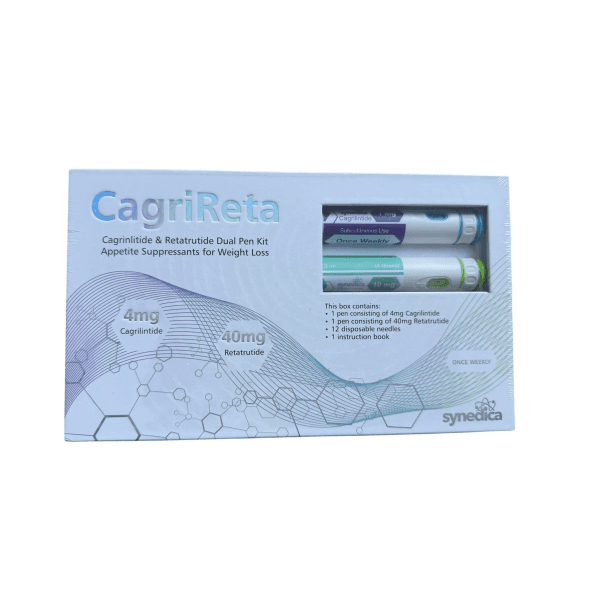
Synedica CagriReta 40mg
Synedica CagriReta 40mg supplies cagrilintide (CAS 1415456-99-3), a long-acting acylated amylin analogue, alongside retatrutide (CAS 2381089-83-2), a triple GIP/GLP-1/glucagon receptor agonist peptide, sold as a lyophilized powder strictly for laboratory and in-vitro metabolic research. No registered clinical trial has evaluated this specific two-molecule combination.
£190.00
Size
Form: Lyophilized Powder
Quantity
Form: Lyophilized Powder
Pack Size: 40mg
Storage & Handling
Storage (Lyophilized): Store at -20°C in a dry, desiccated environment. – After Reconstitution: Store reconstituted peptide at 2–8°C and use within 30 days. For long-term storage, aliquot and freeze at -20°C. Avoid repeated freeze-thaw cycles. – Reconstitution: Reconstitute in sterile bacteriostatic water or appropriate buffer depending on experimental needs.
â ï¸ This product is sold strictly for in vitro research and laboratory use only. It is not for human or veterinary use. By purchasing or using this product, the buyer agrees they have read, understood and accept the Terms & Conditions of Synedica UK. Terms & Conditions.
Cagrilintide and retatrutide are two of the most closely watched individual peptides in metabolic research, and “CagriReta” listings pairing them have grown alongside that interest. Unlike cagrilintide paired with semaglutide — which has a published Phase 3 trial under the name CagriSema — the cagrilintide-retatrutide combination itself has not been evaluated in any registered clinical trial. Listings that imply combined-trial evidence for this specific pairing are describing something that does not yet exist in the published literature. This page sets out what each molecule is individually, what the research on each one (studied separately) has found, and how to verify what arrives before it goes anywhere near the bench.
What Cagrilintide and Retatrutide Are
Cagrilintide is a long-acting, acylated amylin analogue — a peptide designed to activate amylin receptors rather than the incretin receptor pathways that retatrutide targets. Amylin receptor signalling is studied for its role in satiety signalling via the brainstem. Cagrilintide carries CAS number 1415456-99-3, molecular formula C194H312N54O59S2, and a molecular weight of approximately 4,409.0 g/mol.
Retatrutide is a 39-amino-acid single-molecule peptide engineered as a triple hormone-receptor agonist, acting on GIP, GLP-1, and glucagon receptors simultaneously — a broader receptor profile than single- or dual-pathway incretin peptides. It carries CAS number 2381089-83-2, molecular formula C221H342N46O68, and a molecular weight of approximately 4,731.33 g/mol. Because cagrilintide acts on amylin receptors while retatrutide acts on three separate incretin-family receptors, the two are studied as a multi-pathway combination covering four receptor targets in total, distinct from single-molecule or two-receptor research compounds.
What Current Research Says
No registered clinical trial has evaluated cagrilintide and retatrutide administered together. Each molecule does, however, have its own published research base, studied independently.
Retatrutide's pivotal Phase 2 trial (Jastreboff et al., 2023, N Engl J Med) enrolled 338 adults with obesity but without type 2 diabetes. Over 48 weeks, once-weekly subcutaneous retatrutide produced least-squares mean weight reductions of 8.7% at 1 mg, 17.1% at 4 mg, 22.8% at 8 mg, and 24.2% at 12 mg, compared with 2.1% for placebo. Gastrointestinal effects were the most commonly reported findings, generally mild to moderate.
Cagrilintide's own monotherapy arm, recorded within the REDEFINE 1 Phase 3 trial (Garvey et al., 2025, N Engl J Med), produced a mean body-weight reduction of 11.8% over 68 weeks at the 2.4 mg dose, compared with 2.3% for placebo, when cagrilintide was administered alone rather than alongside semaglutide.
These are two separate trials of two separate molecules, run under different protocols, dose ranges, and durations — they cannot be added together or used to infer what a combined cagrilintide-retatrutide protocol would produce. None of these findings constitute a treatment claim for this research-use product; they describe outcomes recorded in registered clinical trials of each molecule individually, under medical supervision, not what a laboratory-use compound sold by Synedica UK does for an individual.
Specifications
| Property | Cagrilintide | Retatrutide |
|---|---|---|
| Receptor target | Amylin receptors (AMY) | GIP, GLP-1 and glucagon receptors (triple agonist) |
| CAS number | 1415456-99-3 | 2381089-83-2 |
| Molecular formula | C194H312N54O59S2 | C221H342N46O68 |
| Molecular weight | ≈4,409.0 g/mol | ≈4,731.33 g/mol |
| Amino acid count | 37 (amylin analogue backbone) | 39 |
| UK legal / regulatory status | Not licensed as a medicine under the Human Medicines Regulations 2012 as sold here — supplied strictly for laboratory research | |
Both sets of figures are independently verifiable against public chemical databases such as PubChem, and researchers are encouraged to cross-check batch-specific documentation against these reference values rather than relying on a listing description alone.
Purity, Batch Testing and Certificate of Analysis Standards
Every Synedica CagriReta 40mg unit offered for sale is supplied with third-party analytical documentation rather than a single purity percentage repeated across listings. A Certificate of Analysis (COA) should show the specific batch or lot number, the analytical method used (typically HPLC or mass spectrometry), the measured purity result for that batch, and the issuing laboratory. Because this is a two-component lyophilized product, researchers should confirm the COA documents both cagrilintide and retatrutide content separately rather than a single blended purity figure. See our contact page to request a Certificate of Analysis for a specific batch.
Sourcing and Verification
Buying a combination peptide product like cagrilintide and retatrutide from a UK-based supplier does not remove the need to verify what arrives. Before ordering, check that the listing states research-use status clearly, that batch documentation is offered rather than promised only "on request," and that each compound's identity (CAS number, molecular formula) is independently verifiable against a source such as PubChem. Listings should also be honest about the evidence base: individual research on cagrilintide and individual research on retatrutide is well documented, but no registered trial yet exists for the two combined, and a listing implying otherwise is a red flag. Synedica CagriReta 40mg is offered for sale on this basis, with documentation available per batch. Researchers examining the individual molecules may also find the Synedica Retatrutide 40mg Injection Kit and Cagri Sema (cagrilintide paired with semaglutide) relevant, and the full catalogue is browsable on the research products page.
Frequently Asked Questions
What is Synedica CagriReta 40mg used for?
It supplies cagrilintide and retatrutide together, as a lyophilized powder, for laboratory and in-vitro research into amylin-receptor and multi-incretin-receptor signalling and appetite/energy balance pathways. It is not sold for any therapeutic, dietary, or performance use.
Has the cagrilintide-retatrutide combination been studied in a clinical trial?
No. Unlike cagrilintide paired with semaglutide, which has a published Phase 3 trial (REDEFINE 1), no registered clinical trial has evaluated cagrilintide and retatrutide administered together. Each molecule has been studied individually in its own trials, and those results cannot be combined or used to infer what a joint protocol would produce.
What is the difference between cagrilintide and retatrutide?
They act on different receptor families. Cagrilintide is a long-acting amylin analogue acting on amylin receptors, while retatrutide is a triple agonist acting on GIP, GLP-1, and glucagon receptors simultaneously. They are structurally distinct peptides with different receptor profiles.
Is it legal to buy cagrilintide and retatrutide as research chemicals in the UK?
UK researchers and laboratories can lawfully purchase compounds such as cagrilintide and retatrutide when they are supplied and marketed strictly for research or in-vitro use rather than as a medicine. This product is not licensed under the Human Medicines Regulations 2012 (SI 2012/1916) and has not been assessed by the MHRA for human safety or efficacy under that route, so it must not be purchased for human or veterinary use.
What has clinical research found about retatrutide on its own?
In a Phase 2 trial of 338 adults with obesity (Jastreboff et al., 2023, N Engl J Med), once-weekly retatrutide produced 48-week weight reductions of 8.7% at 1 mg, 17.1% at 4 mg, 22.8% at 8 mg, and 24.2% at 12 mg, compared with 2.1% for placebo. These findings describe a registered clinical trial of retatrutide alone, under medical supervision; they are not claims about this research-use product.
What has clinical research found about cagrilintide on its own?
In the monotherapy arm of the REDEFINE 1 Phase 3 trial (Garvey et al., 2025, N Engl J Med), cagrilintide alone produced a mean weight reduction of 11.8% over 68 weeks, compared with 2.3% for placebo. This describes cagrilintide administered without retatrutide or semaglutide.
What does the Certificate of Analysis (COA) show?
A COA should confirm the batch number, the analytical testing method (typically HPLC or mass spectrometry), the measured purity for that specific batch — for both cagrilintide and retatrutide content — and the issuing laboratory, allowing a researcher to verify what a given batch actually contains rather than relying on a generic listing description.
How is the CAS number used to verify these compounds?
CAS 1415456-99-3 identifies cagrilintide and CAS 2381089-83-2 identifies retatrutide. Researchers can cross-check these numbers, along with the molecular formulas (C194H312N54O59S2 for cagrilintide; C221H342N46O68 for retatrutide) and molecular weights, against an independent database such as PubChem to confirm chemical identity before use.
Is retatrutide a peptide?
Yes. Retatrutide is a synthetic 39-amino-acid single-molecule peptide engineered to act on GIP, GLP-1, and glucagon receptors simultaneously, distinguishing it from single- or dual-receptor incretin peptides.
Does the lyophilized powder format affect the research application?
The lyophilized format is a storage and packaging format only. This listing makes no dosing, reconstitution, or administration recommendations; researchers determine their own protocols in line with their institution's research and safety governance.
How should Synedica CagriReta 40mg be stored before use?
Store according to the conditions printed on the batch documentation and product label, generally in cool, dry, dark conditions consistent with lyophilized peptide storage. Exact storage parameters and shelf life are batch-specific and confirmed on the accompanying documentation.
Can this product be used in human or veterinary applications?
No. It is sold strictly for laboratory and in-vitro research use. It is not a medicine, is not for human or veterinary use or consumption, is not licensed under the Human Medicines Regulations 2012, and has not been assessed by the MHRA for safety or efficacy under this listing.
Where can I buy CagriReta for research use?
It is available for sale directly from Synedica UK, supplied with batch documentation and third-party testing for verified UK research buyers.
Related Reading
Author: Synedica UK Science & QA Team
Last updated: 29 August 2026